Hedge Trimming in Newham

Hedge trimming in Newham is a straightforward way to keep boundary planting neat, healthy and well proportioned across front gardens, rear gardens and shared outdoor spaces. Our work focuses on shaping hedges cleanly, maintaining the desired height and width, and removing the growth that can make a hedge look uneven or start to crowd paths, fences and driveways. Careful trimming matters because a hedge is not just a line of greenery; it is part of the structure of the garden.
We handle regular hedge maintenance as well as one-off cutting for hedges that have grown beyond their preferred shape. That can include tidying formal hedges, reducing soft seasonal growth and keeping mixed boundary planting looking consistent through the year. Where access is limited, or where a hedge sits close to hard landscaping, the cutting approach needs to be considered so the finished line remains balanced rather than over-cut. Good hedge work is measured, not rushed.
For homeowners, landlords and property managers, the main aim is to keep hedges manageable and presentable without stripping them back too hard. If you are comparing options, start with the hedge’s current size, the shape you want to keep and how often it normally needs attention. You can use the site pages below to look at related services and then request a quotation when you are ready.
Routine hedge maintenance and seasonal shaping
Regular hedge maintenance is usually the best way to avoid dense, overlong growth that becomes difficult to bring back into shape. Small, frequent trims help preserve a crisp edge on formal hedges, while softer garden hedges may only need periodic shaping to keep them dense and attractive. The right method depends on species, growth rate and the form you want to maintain, so a hedge can be cut for function, privacy or a softer ornamental finish.
In practice, seasonal shaping often means taking a steady approach rather than removing too much at once. A hedge that is trimmed back evenly will generally keep its line better and recover more neatly than one cut with a heavy hand. If you want to keep the top level, the sides square, or a tapered profile that lets the base receive more light, that choice should be made before cutting begins. Consistency is what keeps the finished result looking deliberate.
Useful pages for related work include garden maintenance for broader upkeep and lawn mowing where hedge care is part of a wider garden routine. Some customers prefer to combine hedge cutting with garden clearance when the surrounding area also needs attention, particularly after a long period without trimming. Keeping the tasks connected can make the overall finish more coherent.
Shaping formal hedges and boundary lines

Formal hedges often need a more exact finish than informal planting, especially when they define a front boundary, screen a patio or frame an entrance. The cut needs to be level, the sides need to be even and the top should reflect the intended line of the hedge rather than any natural irregularity in growth. That is why a careful shaping service is important: it supports the garden’s layout as well as the hedge itself.
When trimming boundary hedges, the goal is often to preserve privacy while restoring order. In some gardens, the hedge may have widened over time and started to encroach on a path, reduce light or obscure a view that the owner wants to keep open. In others, the hedge may simply need a tidy profile so it sits neatly against a fence or wall. The result should look purposeful, with no ragged edges or patchy over-cutting.
If the hedge forms part of a larger planting scheme, landscape gardening can help to coordinate the hedge with beds, borders and paving, while landscaping may be useful where the hedge sits within a wider redesign. These services are especially relevant when the trimming work is part of a bigger decision about layout, circulation and how the garden should be used day to day.
Reduction work for overgrown hedges
Some hedges only need a trim; others need a more substantial reduction to bring them back within a workable size. Reduction work is more involved because it has to balance appearance, plant health and the practical space available around the hedge. Where a hedge has been left to grow for too long, reducing it in stages may be the safer and more controlled choice than trying to force it back in one cut.
Any reduction should be assessed against the hedge’s condition, thickness and position. A hedge near a boundary, for example, may need extra care if there is little room to work without affecting neighbouring ground, sheds, walls or planting. The aim is to restore proportion and manageability while leaving the hedge with enough structure to recover well. That is especially important if the hedge is still expected to provide screening, shelter or a clean dividing line.
If cutting back leads to a larger amount of green waste, related pages such as recycling and sustainability explain the approach to responsible handling, while services overview can help you compare hedge trimming with other garden work. If you need to talk through the scale of the hedge before asking for a quotation, that can be done in plain terms: describe the hedge, its length and the result you want.
What affects hedge trimming prices
Hedge trimming costs are usually shaped by the size of the hedge, the amount of work needed and how accessible it is. A small, regularly maintained hedge is generally simpler to cut than a tall or very wide one that has become dense and uneven. Access matters too, because a hedge that can be reached safely from open ground is different from one close to obstacles, slopes or restricted garden layouts.
It also helps to think about finish level. A light seasonal trim, a thorough tidy, and a significant reduction are not the same job, even if they concern the same hedge. The amount of cutting, the time needed to leave the edges even, and the handling of clippings all influence the quotation. If the hedge forms part of a wider job, that can also change how the work is planned and priced.
For customers who want to understand the commercial side of the service, pricing and quotes is the best place to start, and contact us is the clearest route when you are ready to request a quotation. Keep your description practical: mention the hedge type if you know it, the approximate length, whether it needs a light tidy or heavier reduction, and anything that may affect access.
Hedges alongside gardens, paths and driveways
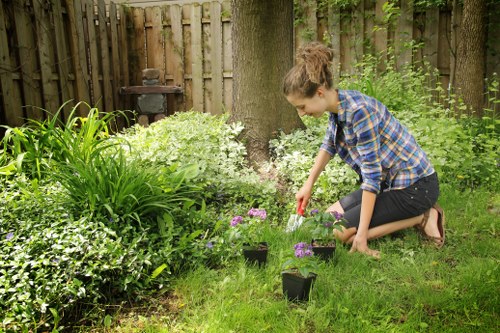
Hedges do more than mark a line at the edge of a garden. They often sit beside paths, driveways, entrances and patios, which means the trimming work needs to respect how people move through the space. A hedge that leans over a walkway can make a route feel tighter than it should, while a hedge cut back cleanly can open up the line of travel and improve the overall appearance of the frontage.
Where hedge trimming is part of a broader tidy-up, it can sit alongside lawn care, border maintenance or light clearance. The key is to decide what the hedge should do in the garden: should it screen, frame, shelter or simply define the edge? Once that is clear, the cut can be matched to the purpose. In this sense, hedge trimming is as much about design discipline as it is about cutting greenery.
If other planting around the hedge also needs attention, garden maintenance is a sensible companion service, and decking services may be relevant when a hedge sits beside a decked seating area that needs a tidy perimeter. A neat hedge can help those spaces feel more settled, especially where the planting and the hard landscaping meet.
Choosing the right hedge finish
The finish you choose affects both appearance and future maintenance. A sharply squared hedge gives a formal, structured result, while a softer profile can look more natural and may suit mixed domestic planting better. Some hedges need a level top for visual order, whereas others work best when their shape follows the garden more gently. Picking the right finish early prevents unnecessary rework later.
Different hedges also respond differently to trimming. Dense evergreen hedges may require a tidy outer cut to keep their face crisp, while lighter or less formal hedges may need selective shaping so they remain balanced without appearing clipped into a rigid block. The purpose of the hedge, the available space and the plant’s growth habit all matter. A sensible approach respects those limits rather than trying to impose one standard shape everywhere.
For larger or mixed gardens, landscape gardening can help coordinate hedge form with the rest of the layout, and tree lopping and removal may be relevant where branches from nearby trees affect light, access or the hedge line. If you are unsure which finish suits the garden, it is better to describe the result you want in everyday language than to worry about technical terms.
Garden spaces in Newham

Newham is a London borough in East London, formed in 1965 from the former county boroughs of West Ham and East Ham. Its landscape includes densely built residential streets, major transport corridors, riverside edges and a series of open spaces that interrupt the urban grain. The borough’s modern identity has been shaped by regeneration, changing industry and the expansion of housing around established neighbourhoods such as Stratford, Plaistow, East Ham, Manor Park and Canning Town. These places sit within a compact area that still shows traces of older settlement patterns, from terraces and mansion blocks to newer apartment developments.
One of Newham’s most recognisable features is its connection to the Royal Docks and the River Thames, with dockland history still visible in the scale of waterways, basins and rebuilt quayside areas. Stratford has become a particularly prominent centre since the redevelopment associated with the 2012 Olympic and Paralympic Games, and the Queen Elizabeth Olympic Park remains an important open space and landmark. The borough also includes parks and green corridors such as West Ham Park, which offers mature trees and sports facilities, and smaller local greens that give nearby streets a softer edge. Cultural life is equally varied, with shopping streets, markets, community venues and a long history of migration shaping the area’s character. It is a borough defined by contrast: dense urban form, major infrastructure and pockets of open ground existing side by side.
Preparing for hedge cutting
Before trimming begins, it helps to think through the hedge’s basic details so the work can be quoted and planned accurately. A simple description of the hedge length, approximate height and how dense it looks is usually more useful than a long explanation. If there are nearby features such as fences, walls, gates or paving, those should be mentioned because they affect how the hedge can be cut and how the work area is managed.
Photos can also be useful when you are requesting a quotation, especially if the hedge has uneven sections, mixed growth or restricted access. They help show whether the hedge needs a tidy, a shape correction or something more substantial. If you know the hedge is seasonal and only requires occasional trimming, that is worth saying too. The more precise the request, the easier it is to match the service to the job without adding unnecessary work.
To keep everything straightforward, you can use about us to learn more about the wider business pages and contact us when you are ready to ask for a quotation. A short message with the hedge’s location, size and general condition is usually enough to begin. Clear details save time and help the quotation reflect the actual work rather than guesswork.
Maintaining healthy growth after trimming
Good hedge trimming is not only about the visible finish on the day; it also supports the hedge’s future growth. A hedge that is cut evenly is easier to maintain next time, because the outline stays readable and the next trim can follow the existing form. Over time, that creates a calmer and more controlled boundary, whether the hedge is used for screening or simply to define the garden edge.
Aftercare matters in a practical sense. A hedge that has been reduced heavily may need a different maintenance rhythm from one that only receives light seasonal trims. If the hedge is part of a more complex planting scheme, the surrounding soil, mulch and garden surface should also be considered so the whole area continues to look tidy. In that sense, hedge work and garden upkeep are connected, but they do not have to be treated as the same task.
Related pages such as insurance and safety and health and safety policy provide useful supporting information where you want to understand the approach to working practices. For a broader view of how hedge cutting fits into the range of services, services overview is a practical place to compare options before making contact.
Requesting a quotation for hedge trimming

If you are ready to move ahead, the quotation stage is best kept simple and factual. Tell us what kind of hedge needs trimming, the size of the area involved and whether the work is a routine tidy, a heavier reduction or part of a wider garden job. If the hedge sits close to property boundaries, access points or other features, include that as well so the scope is understood from the start.
When the hedge is part of a broader outdoor project, it can help to mention that in the same enquiry rather than splitting the work into separate messages. That makes it easier to look at the hedge alongside other garden tasks and agree on the most sensible order for the work. Keep the request concise, but make sure it is clear enough for the quotation to reflect the real size of the job and the finish you want.
When you are ready, please request a quotation. If you would like to review related details first, pricing and quotes and garden clearance can help you decide what to include in your message. A well-described hedge trim is easier to price accurately and easier to complete neatly.